Choosing a Water Damage Company in Cedar Park TX: 7 Questions
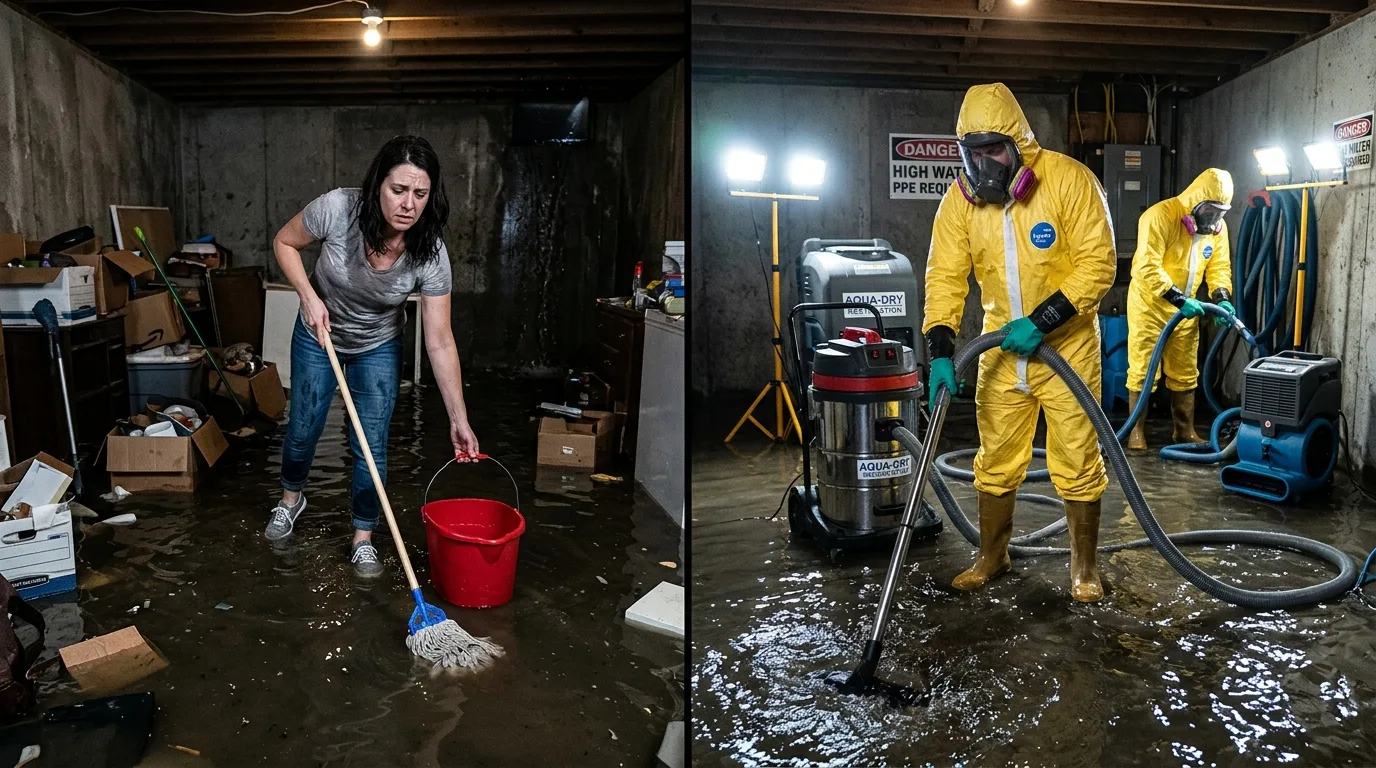
Choosing the right water damage restoration company in Cedar Park, TX is one of the most consequential decisions you’ll make after a water event — and you often have to make it under significant time pressure. The quality difference between a thorough, certified restoration and a surface-level one isn’t visible when the job ends. It shows up weeks later, when mold appears in a wall that was declared “dry” without instruments confirming it, or when a TDLR-unlicensed mold remediation fails post-remediation testing.
In this post, we provide 7 specific questions Cedar Park homeowners should ask any water damage restoration company before signing anything — with explanations of why each question matters and what a credible answer looks like.
Questions About a Cedar Park Water Damage Contractor?
We welcome any of these questions — transparency is how we earn trust. Call (877) 698-1311.
Why Contractor Selection Matters More in Cedar Park
Water damage restoration in Cedar Park involves local conditions that add complexity beyond a standard restoration company’s general experience: slab-on-grade foundations that hide sub-slab moisture, Taylor Black Clay soil that pushes moisture upward through the concrete, Flash Flood Alley storm events that can produce Category 2–3 water simultaneously with clean water pipe events, and Texas’s TDLR licensing requirements for mold remediation that many out-of-state contractors don’t know about.
A contractor who has restored properties throughout Williamson County understands these specific conditions. One who has mainly operated in other Texas markets or who was dispatched from out of state during a major storm event may not — and the gaps in their knowledge show up in incomplete sub-slab drying, missed Category 3 classification, or mold remediation that doesn’t meet TDLR standards.
7 Questions to Ask Before Hiring
1. Are your technicians IICRC-certified in Water Damage Restoration (WRT)?
IICRC WRT certification is the baseline credential for water damage restoration technicians. It confirms the technician understands moisture science, the S500 structural drying standard, and the category classification system. Ask for the IICRC certificate — any legitimate technician will have it available. Also ask about Applied Structural Drying (ASD) certification, which covers the drying equipment calibration and monitoring process in more depth.
2. Do you hold TDLR licensing for mold remediation in Texas?
Texas law requires TDLR licensing for any mold remediation work — and most significant water damage events in Cedar Park carry mold risk. A company that doesn’t hold TDLR licensing cannot legally perform mold remediation in Texas if mold is found during the restoration. Ask for the TDLR license number and verify it at TDLR.texas.gov before signing a contract that includes mold remediation scope.
3. Do you use truck-mounted or portable extraction equipment?
The answer reveals the company’s equipment capacity. Truck-mounted extraction units remove water at 100+ gallons per minute and are required for any significant Cedar Park flood event. Portable units are useful as supplements but insufficient as the primary extraction tool for flash flood events. Any company responding to a Flash Flood Alley storm event with only portable equipment will take much longer to extract water — allowing significantly more moisture migration into walls and subfloor.
4. How do you address sub-slab moisture in Cedar Park slab foundations?
This question separates companies with Cedar Park experience from those without. A company that has worked in Williamson County regularly will immediately explain their sub-slab moisture protocol: thermal imaging to detect temperature anomalies, moisture probes to confirm sub-slab moisture levels, drilling access ports, and desiccant dehumidification beneath the slab. A company that responds with “we dry the floors and walls” is not addressing the specific challenge of Cedar Park’s slab construction.
Cedar Park Water Damage — All 7 Questions Welcome
We'll answer every question before you sign anything. Call (877) 698-1311 for a free assessment.
5. Do you provide daily moisture readings during the drying phase?
The drying phase of water damage restoration is not self-evident — it requires daily instrument readings to confirm that moisture content is declining toward IICRC dry standards. Any company that cannot provide daily moisture logs from the drying phase cannot document that the job was actually completed to standard. This documentation is also critical for your insurance claim — it shows the adjuster the systematic drying process rather than asking them to take the contractor’s word for it.
6. Who do you work with for insurance claims, and how do you coordinate with adjusters?
A good answer demonstrates specific familiarity with insurance claim documentation requirements — scope of work format, photo documentation standards, moisture log format, and the specific differences between how different major carriers handle water damage claims. A company that says “we work with all insurance” without specific process detail probably means they fill out whatever paperwork the homeowner asks for, rather than proactively managing the claim documentation.
7. Do you provide independent post-remediation verification testing for mold?
For any project that includes mold remediation, post-remediation verification testing by an independent third-party hygienist — not performed by the same company that did the remediation — is the only objective confirmation that mold remediation was complete. A company that offers to test their own remediation work is reviewing their own homework. Ask specifically whether the post-remediation test is conducted by an independent licensed mold assessor and whether the test results will be shared with you before the project is declared complete.
What a Credible Contractor Looks Like in Cedar Park
The best water damage restoration companies in Cedar Park share several characteristics: they answer technical questions specifically and confidently, they provide written estimates that itemize each phase of work rather than a single line-item total, they hold all required certifications and licenses and will provide documentation on request, and they make the insurance coordination process easier for the homeowner rather than leaving it entirely to the homeowner to manage.
Red flags include: inability to provide IICRC certificate numbers, no TDLR license for mold work, estimates delivered verbally without written scope, pressure to sign immediately without time to compare options, and claims that the job can be completed faster than the IICRC S500 standard allows. No contractor can dry a Cedar Park home in 24 hours and meet dry standards — that claim indicates either false documentation of readings or non-standard protocol.
Frequently Asked Questions
What should I do if a water damage contractor pressures me to sign immediately in Cedar Park?
Do not sign under pressure. Legitimate water damage restoration contractors understand that homeowners need a brief window to evaluate their options — even in an emergency. Any contractor who demands immediate signature before you can ask questions is typically using urgency to prevent comparison shopping. You can authorize emergency extraction verbally or with a minimal emergency authorization form while taking 24 hours to review the full restoration scope.
Is it safe to use an out-of-state water damage contractor who came to Cedar Park after a major storm?
Out-of-state storm-chasing contractors are a genuine risk for Cedar Park homeowners. They may lack IICRC certification, definitely lack Texas TDLR licensing for mold remediation, and often don’t understand Cedar Park’s specific slab foundation challenges. They also typically won’t be available for follow-up if problems emerge after they’ve left the area. Verify credentials before authorizing any work, regardless of the contractor’s origin.
How do I find licensed water damage contractors in Cedar Park?
The IICRC locator at iicrc.org allows you to search certified firms by zip code. The TDLR license lookup at TDLR.texas.gov confirms mold remediation contractor licensing. Local references from Williamson County neighbors who have used a contractor are also valuable. Ask the contractor for references from recent Cedar Park or Williamson County projects specifically — not references from projects in other markets.
Related:
- Water damage restoration Cedar Park: 2026 complete guide
- Emergency water removal in Cedar Park, TX — what to expect
- Cedar Park neighborhood guide: water risk areas
Cedar Park Water Damage? Ask Us All 7 Questions
We hold IICRC certification, TDLR licensing, and local Williamson County experience. Call (877) 698-1311.