Water Damage Restoration Cedar Park: 2026 Complete Guide
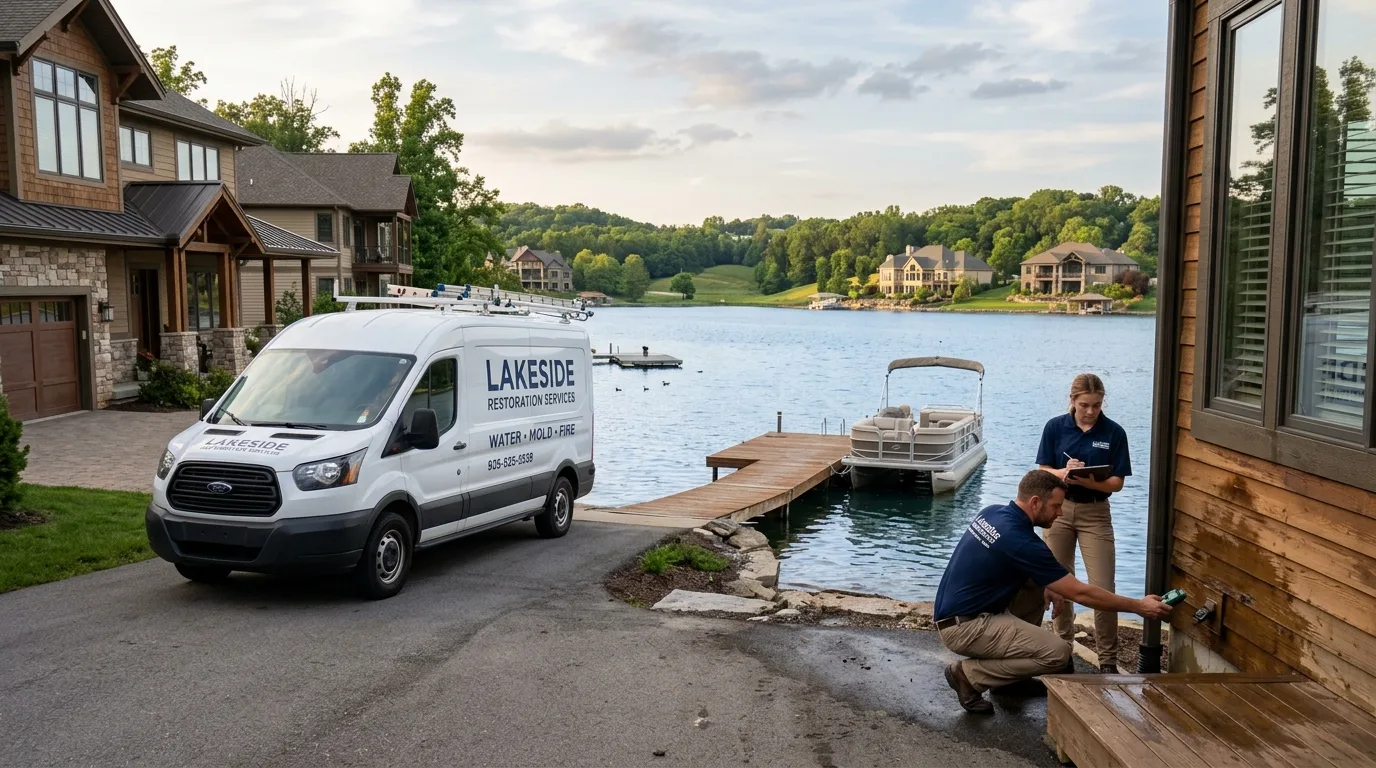
Every year, thousands of Cedar Park homeowners deal with water damage — and most of them spend the first critical hours making decisions that affect the final cost and outcome more than anything that happens afterward. This guide covers everything you need to know about water damage restoration in Cedar Park, TX: what the process involves, what it costs in our market, and how to choose a contractor who will do the job right.
In this post, we cover the restoration process from start to finish, Cedar Park-specific cost factors, local permitting requirements, and the questions you should ask before hiring any restoration contractor.
Water Damage in Cedar Park? Get Help Now
24/7 emergency water extraction and restoration — call (877) 698-1311 for immediate dispatch.
Why Water Damage Restoration in Cedar Park Matters
Cedar Park’s location in Flash Flood Alley means water damage is not an edge case here — it’s a recurring reality that affects thousands of Williamson County homeowners across multiple storm seasons. Spring thunderstorms that are common from March through May routinely dump several inches of rain within a few hours, and the city’s position in the Central Texas topography means that water has nowhere to go but into low-lying properties.
The consequences of delayed response in Cedar Park are worse than in many other Texas markets because of the warm, humid conditions that follow storm events. The EPA documents that mold begins growing within 24–48 hours of water saturation, but in Cedar Park’s spring climate, that window can compress further. Homeowners who wait to see if water drains naturally — or who choose the cheapest contractor rather than the fastest — frequently find that a $3,000 water extraction job has become a $9,000 mold remediation project within a week.
Water damage restoration in Cedar Park is also complicated by the city’s expansive Taylor Black Clay soil, which saturates fully during heavy rain and then forces moisture upward through slab foundations in ways that standard extraction equipment cannot address. Communities near Brushy Creek Regional Trail and throughout the Cypress Bend area are particularly exposed to this combination of surface flooding and sub-slab moisture intrusion.
Types of Water Damage
Category 1 (Clean Water): Supply line breaks, appliance failures, and rain intrusion through damaged roofing. The least contaminated water — still requires full extraction and drying but no biohazard protocols.
Category 2 (Gray Water): Dishwasher overflow, washing machine discharge, and aquarium leaks. Contains biological contaminants that require antimicrobial treatment in addition to extraction and drying.
Category 3 (Black Water): Sewage backup, Brushy Creek or storm drain overflow mixed with sewer water, and rising ground water. Contains active pathogens and requires full biohazard protocols. Cedar Park’s spring storm events frequently produce Category 3 water damage when storm drain systems become overwhelmed.
Flood Damage: Storm water that has contacted exterior soil is typically Category 2 or 3 regardless of visual appearance, because contact with soil introduces bacteria and other contaminants.
Practical Restoration Steps
- Immediate mitigation: Stop the water source if possible, document damage with photographs, and call a restoration company immediately — before calling your insurance company.
- Extraction: Truck-mounted equipment removes standing water within 1–4 hours depending on volume. Consumer sump pumps and shop vacuums are inadequate for significant flood events.
- Moisture mapping: Thermal imaging and moisture meters identify all affected areas — including inside walls and beneath flooring — that don’t show surface water.
- Structural drying: Commercial air movers and dehumidifiers run continuously until moisture meter readings confirm IICRC dry standards have been reached — typically 3–7 days.
- Material assessment: Drywall, insulation, and flooring are evaluated for salvageability. Non-salvageable materials are removed before reconstruction begins.
- Reconstruction: Replacement of removed materials with new framing, drywall, insulation, and finishes — requires Cedar Park building permits for structural work.
How the Restoration Process Works in Cedar Park
The standard restoration sequence follows IICRC S500 guidelines, but Cedar Park’s conditions add requirements that out-of-area contractors often overlook. Sub-slab moisture assessment is one example — most Cedar Park homes are built on slab-on-grade foundations, and any water event that saturates the surrounding soil pushes moisture upward through the concrete. Water meters and thermal imaging that focus only on walls and flooring will miss this intrusion point entirely.
IICRC-certified contractors in Cedar Park should also factor in the local humidity when calibrating dehumidification equipment. Achieving IICRC dry standards in Cedar Park’s spring conditions requires more dehumidification capacity per square foot than the same project would require in a drier climate. Contractors who underestimate this and pull equipment too early are a common source of post-restoration mold claims in Williamson County.
Get IICRC-Certified Water Damage Restoration in Cedar Park
We follow the S500 standard and verify dryness with instruments before any reconstruction begins. Call (877) 698-1311.
Cost Factors for Water Damage Restoration
Water damage restoration in Cedar Park averages $3,062–$3,555 for flood damage cleanup, with comprehensive Austin metro projects averaging $3,545–$6,101. Minor water cleanup runs $500–$1,500. These figures shift based on several Cedar Park-specific factors:
Water category is the single largest cost variable. Category 3 events cost 40–60% more than Category 1 events of equivalent size because biohazard protocols, enhanced material removal, and antimicrobial treatment add significant labor and material cost.
Slab foundation moisture is a Cedar Park-specific cost driver. When water migrates beneath the slab — which is common in Twin Creeks and Ranch at Brushy Creek during major storm events — specialized sub-slab extraction and drying adds 2–4 days and corresponding equipment cost to every project.
Mold remediation scope is the cost wildcard. Every day of delayed response increases the probability that mold remediation will be needed, and Cedar Park’s warm climate means that probability rises fast. A project that begins within 6 hours has a very different mold risk profile than one that begins 36 hours later.
Frequently Asked Questions
How long does water damage restoration take in Cedar Park?
Structural drying in Cedar Park takes 3–7 days under continuous equipment operation. This phase cannot be shortened by running dehumidifiers at higher settings — the physics of moisture removal from structural materials follows the IICRC S500 standard regardless. Reconstruction begins after drying is verified and can take 1–3 weeks depending on scope. Total project time for a significant flood event runs 2–5 weeks from extraction to completion.
Do I need a permit for water damage repairs in Cedar Park?
Structural repairs following water damage require a Cedar Park building permit through the MGO Connect online portal. Residential permits are typically issued within 5–7 business days. Surface-only repairs — flooring replacement, small drywall patches — may not require permits, but verify with Cedar Park building services at 512-401-5100 or permits@cedarparktexas.gov. Cedar Park’s building permit FAQ covers common restoration scenarios.
What is the mold risk after water damage in Cedar Park?
The EPA’s documented 24–48 hour mold growth window applies at standard ambient temperatures. In Cedar Park during spring storm season, when outdoor temperatures are 75–90°F and indoor humidity is elevated from a flood event, mold colonization can begin in as little as 12–18 hours. This is why professional restoration must begin immediately — not the next business day.
Related:
- How much does water damage restoration cost in Cedar Park TX?
- Flash Flood Alley: Cedar Park flood risk and what to do
- 5 signs of water damage in your Cedar Park home
Cedar Park Water Damage Experts — Call Anytime
24/7 emergency response for Cedar Park, Leander, Round Rock, and Williamson County. Call (877) 698-1311.