Flash Flood Alley: Cedar Park Flood Risk, TX & What To Do
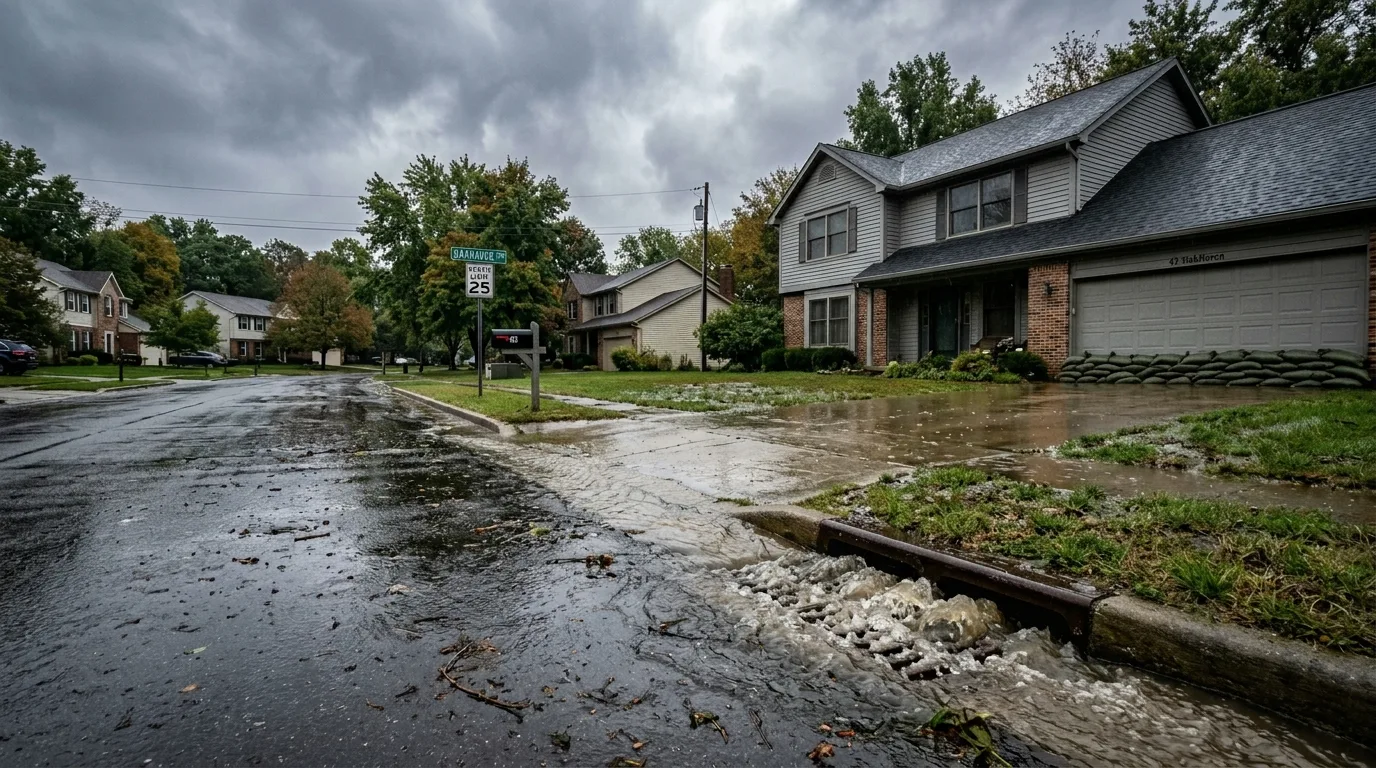
According to FirstStreet Foundation data, 4.6% of Cedar Park properties currently carry significant flood risk — a number projected to rise to 4.9% within 30 years as development increases the amount of impervious surface in the watershed. That might sound modest in percentage terms, but it translates to thousands of residential properties in a city of Cedar Park’s size facing real, recurring exposure to flash flood damage every spring storm season.
In this post, we cover what makes Cedar Park a Flash Flood Alley city, which neighborhoods carry the highest flood risk, and the immediate steps homeowners should take when flooding hits to minimize damage and protect their insurance claim.
Cedar Park Flash Flood Hit Your Home?
24/7 flood damage restoration dispatch — call (877) 698-1311 now.
Why Cedar Park Sits in Flash Flood Alley
Central Texas has earned the Flash Flood Alley designation because of a specific set of geographic and meteorological conditions that come together with unusual frequency here. Warm, moist air from the Gulf of Mexico flows northward and collides with cold fronts along the Balcones Escarpment — the geological boundary running through the western edge of Austin and Cedar Park. When this collision produces convective storms, the resulting rainfall can be extreme: 2, 4, and even 6 inches per hour in localized cells.
The limestone and clay terrain that underlies Cedar Park and Williamson County is largely impermeable at the surface — particularly Taylor Black Clay, which loses drainage capacity entirely when saturated. This means nearly all of the rainfall from a major storm event runs overland toward the lowest point in the landscape rather than absorbing into the ground. The Brushy Creek watershed, which drains a large portion of Cedar Park, concentrates this runoff rapidly — Brushy Creek Regional Trail follows a creek system that can rise from normal flow to flood stage in under an hour during extreme events.
The Brushy Creek dams were designed to mitigate regional flooding from these events, but they are sized for historical storm frequencies that may no longer represent the actual pattern — Cedar Park’s ongoing development adds impervious surface area that accelerates runoff and increases peak storm water flow year after year.
Types of Flash Flood Events That Affect Cedar Park
Brushy Creek overflow: Heavy upstream rainfall in the Williamson County watershed can raise Brushy Creek to flood stage regardless of local Cedar Park conditions, affecting properties near the creek system and Lakeline Oaks area.
Storm drain surcharge: When rainfall intensity exceeds the capacity of Cedar Park’s storm drain system, water backs up through drains and rises in streets, entering homes through garage doors and ground-level penetrations.
Sheet flow flooding: In neighborhoods with flatter topography — parts of Carriage Hills and Cypress Bend — sheet flow from uphill areas accumulates against homes before drains can handle the volume.
Soil saturation flooding: Once Taylor Black Clay reaches saturation, subsequent rainfall has nowhere to go but overland. Second-day flooding during multi-day storm events is common in Cedar Park because the soil is already fully saturated from the previous day’s rain.
Practical Immediate Response Steps
- Document before cleanup: photograph every affected area extensively before moving anything — this documentation is critical for your insurance claim
- Stop the source: if interior plumbing is involved in addition to flooding, shut off the main water supply
- Do not run HVAC: running air conditioning through a flooded home distributes mold spores through ducts — leave HVAC off until restoration is complete
- Move valuables to higher ground: safely elevate electronics, documents, and personal items out of the water damage zone without entering water that may be electrically hazardous
- Call restoration and insurance simultaneously: begin the claim notification process while waiting for the restoration crew — do not delay restoration for the adjuster
The 24-48 Hour Mold Window After Cedar Park Flooding
Don't Wait — Cedar Park Mold Starts Within 24 Hours
Get immediate extraction and structural drying to protect your home. Call (877) 698-1311.
The EPA documents that mold growth begins within 24–48 hours of water saturation. In Cedar Park during spring storm season, when overnight temperatures remain in the 60s and daytime temperatures reach the 80s, mold colonization can begin in as little as 12–18 hours after flooding. This is the most important reason not to wait for morning, the weekend to pass, or the insurance adjuster to visit before starting extraction.
Flash flood damage cleanup in Cedar Park requires professional water extraction, not just moving water with towels and fans. Consumer equipment removes surface water but leaves moisture inside walls, beneath flooring, and in insulation. That residual moisture is what drives mold growth — and in Cedar Park’s warm spring climate, it can produce widespread mold infestations from even moderate flooding events within a week of the incident.
Cost of Flash Flood Damage Cleanup in Cedar Park
Flash flood damage restoration in Cedar Park averages $3,062–$3,555 for the cleanup and initial drying phase, with comprehensive restoration projects across the Austin metro ranging $3,545–$6,101. Minor flood events that are caught early and professionally extracted can run $500–$1,500 for the mitigation phase alone.
The cost variables specific to flash flood damage in Cedar Park are the water contamination level (stormwater mixed with street runoff is Category 2; stormwater mixed with sewer overflow is Category 3), the extent of sub-slab moisture intrusion common in Williamson County slab-foundation homes, and whether mold remediation is needed due to delayed response. Homeowner insurance coverage for flood damage varies significantly — standard homeowner policies cover sudden water damage from specific sources, but rising ground water typically requires separate flood insurance through the NFIP. We help homeowners navigate the coverage question at the initial assessment.
Frequently Asked Questions
Which Cedar Park neighborhoods have the highest flood risk?
Properties near Brushy Creek and its tributaries carry the highest flood risk from creek overflow events. Lower-lying sections of Lakeline Oaks, parts of Cypress Bend near Milburn Park, and areas adjacent to storm drain outfalls have elevated risk from storm drain surcharge flooding. Carriage Hills and Ranch at Brushy Creek sections closest to drainage channels also see recurring sheet flow events during major storms. If you’re unsure of your property’s flood risk, FirstStreet Foundation’s flood risk data provides property-level estimates for Cedar Park.
Does Cedar Park’s flood risk require flood insurance?
Standard homeowner insurance policies do not cover rising ground water — the category most common in Cedar Park flash flood events. NFIP flood insurance covers ground water flooding but has a 30-day waiting period before taking effect, meaning purchasing it after a major storm warning is too late. Cedar Park homeowners in the 4.6% of properties at significant flood risk should evaluate NFIP coverage as part of their overall insurance picture. We can help you document flood damage for claims under both standard homeowner and NFIP policies.
What should I do if water is still rising in my Cedar Park home?
Prioritize personal safety first — leave the building if water is rising above floor level or if there is any risk of electrical contact with rising water. Once safely outside, call Cedar Park emergency services if the situation is life-threatening. After the immediate emergency, call Cedar Park Water Damage Restoration at (877) 698-1311 for flood damage restoration dispatch — we are available 24/7 and can begin extraction as soon as it is safe to enter the property.
Related:
- Flood damage restoration in Cedar Park, TX
- Water damage restoration Cedar Park: 2026 complete guide
- Does homeowners insurance cover water damage in Texas?
Flash Flood Damage in Cedar Park? We Respond 24/7
Cedar Park Water Damage Restoration — serving Cedar Park, Leander, Round Rock, and all of Williamson County. Call (877) 698-1311.