24/7 Emergency Water Removal in Cedar Park TX: What to Expect
It’s 2 a.m. and you’ve just discovered standing water in your Cedar Park home. You know you need emergency water removal — but what actually happens when you make that call? What will the technicians do when they arrive, what equipment will they bring, and how long will the process take? Understanding the sequence helps you set accurate expectations and make better decisions in the hours following a water event.
In this post, we cover the emergency water removal process from your first call through the end of the extraction phase, what Cedar Park-specific conditions affect the response, and what comes after extraction is complete.
Emergency Water Removal in Cedar Park — Call Now
24/7 dispatch available. Call (877) 698-1311 and we'll be there within hours.
Why 24/7 Emergency Water Removal Matters in Cedar Park
Every hour standing water sits in a Cedar Park home, it spreads further. Water wicks into drywall at approximately 1–2 feet per hour under saturation pressure, travels beneath flooring to saturate subfloor materials and insulation, and — in Cedar Park’s slab-on-grade homes — migrates through micro-cracks in the concrete to reach sub-slab soil. The math is unforgiving: a 1-hour response difference can mean the difference between a contained single-room extraction and a multi-room structural drying project.
Cedar Park’s position in Flash Flood Alley means emergency water removal calls frequently coincide with peak storm periods — spring nights when multiple homes are flooding simultaneously. Having an established relationship with a restoration company before an emergency happens means you’re not competing for an available crew with a dozen other Williamson County homeowners when a major storm rolls through.
Types of Emergency Water Removal Equipment
Truck-mounted extraction units: The most powerful extraction equipment available, these units pull water at rates of 100+ gallons per minute and provide heated water extraction capability that lifts moisture from beneath carpet padding and flooring. This is the baseline equipment for any significant flood event in Cedar Park’s Lakeline Oaks or Cypress Bend neighborhoods.
Portable extraction units: Useful in areas where the truck unit hose cannot reach — upper floors, interior rooms, tight spaces. Most large flood events use a combination of truck-mounted and portable units.
Flood drying mats: Specialized mats laid directly on hardwood or tile floors that extract moisture from beneath the floor surface without requiring floor removal in salvageable situations.
Sub-slab desiccant units: Equipment specific to Cedar Park’s slab foundation conditions — these insert through drilled ports to dry moisture beneath the concrete that above-slab equipment cannot reach.
Practical Steps During Emergency Water Removal
- Call (877) 698-1311: Provide the address, describe the water source and approximate depth of standing water, and confirm whether the water source has been stopped (main shutoff operated if pipe failure)
- Dispatcher assessment: Our dispatcher will ask triage questions to determine equipment load — volume estimate, water category (is it clean water, appliance water, or sewage?), and presence of electrical hazards
- Crew dispatch: Technicians load appropriate equipment and depart — for Cedar Park addresses, response time is typically 30–90 minutes depending on time of day and storm conditions
- Site assessment on arrival: Technicians conduct a rapid safety check (electrical hazards, structural stability, gas odor), then begin moisture mapping with meters to identify all affected areas
- Extraction sequence: Extraction proceeds from deepest water to shallowest, systematically working through the affected area. Extraction continues until no free-standing water remains
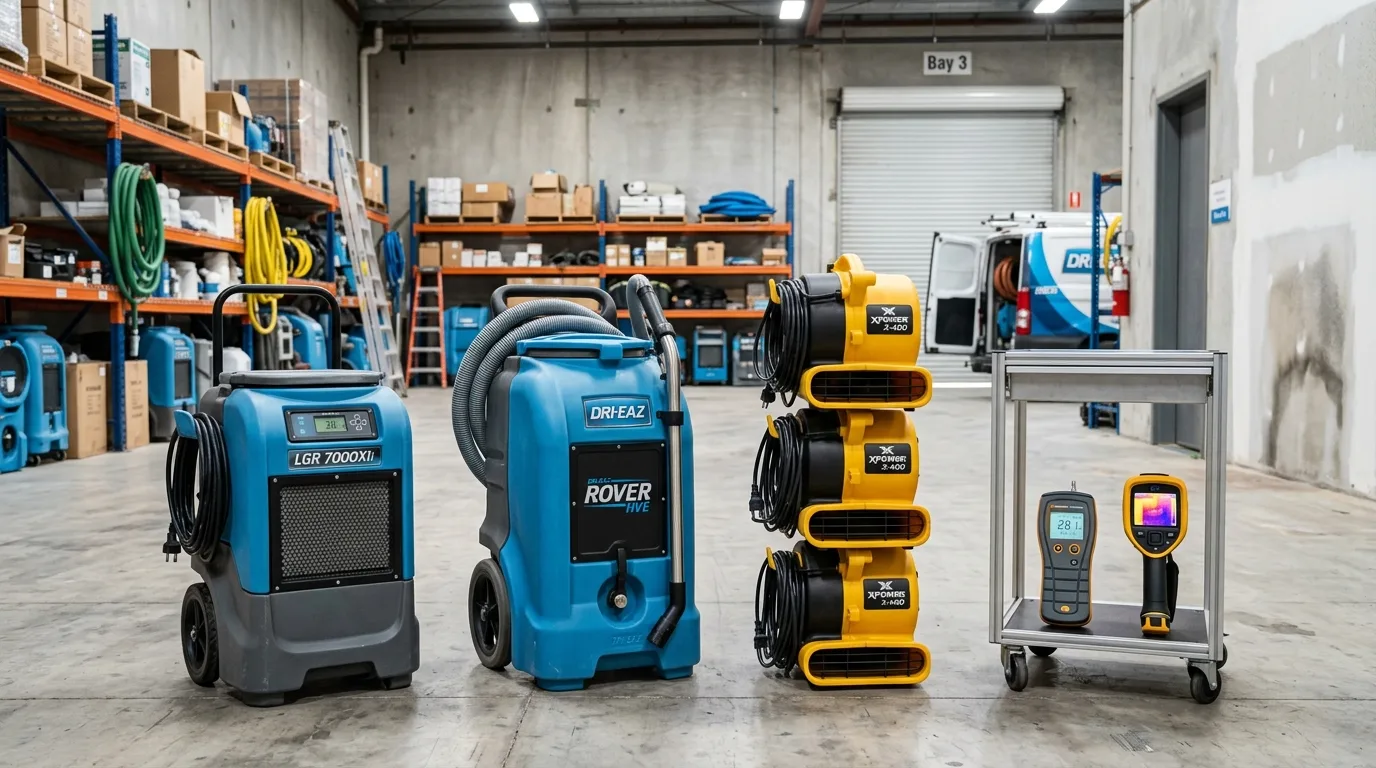
- Equipment setup for drying phase: Air movers and dehumidifiers are positioned based on the moisture mapping findings — not just in the visible water area, but in all adjacent areas where moisture has migrated
What the Emergency Extraction Phase Looks Like
The first 15–30 minutes after the crew arrives are assessment-focused. Technicians photograph every affected area before moving any furniture or equipment, building the documentation record for your insurance claim. Moisture meters are used to map the full extent of moisture intrusion including areas that show no visual water — inside wall cavities, beneath flooring, and in adjacent rooms where water has wicked through wall bases.
Emergency Water Removal — Cedar Park's 24/7 Team
We bring truck-mounted extraction and thermal imaging to every emergency call. (877) 698-1311.
Extraction begins once documentation is complete. For significant standing water in Cedar Park homes, truck-mounted units operate for 1–4 hours before free-standing water is fully extracted. The extraction phase removes visible water but does not complete the mitigation — moisture that has wicked into walls and beneath flooring requires the drying phase that follows.
After extraction, technicians set drywall penetrations if needed — small holes near the floor line that allow air movers to direct airflow into wall cavities where moisture has accumulated. In Cedar Park’s slab-on-grade homes, if sub-slab moisture is confirmed by moisture meters, the crew will assess whether sub-slab drying equipment is needed and discuss the additional scope with the homeowner before drilling access ports.
After Emergency Extraction: The Drying Phase
Emergency water removal is the first phase of water damage restoration — not the complete restoration. After the crew departs with the extraction equipment, air movers and dehumidifiers remain in place and operate continuously, typically for 3–7 days. Technicians return daily to take moisture readings and adjust equipment placement as the structure dries.
The drying phase in Cedar Park requires more dehumidification capacity per square foot than equivalent projects in drier climates because of the ambient humidity that lingers after rain events. We calibrate equipment specifically to local humidity conditions — not generic formulas — to achieve IICRC dry standards within the target window. The project is not declared complete until instrument readings confirm dry standards have been met.
Cost of Emergency Water Removal in Cedar Park
Emergency water removal in Cedar Park typically runs $500–$1,500 for minor events and $2,000–$5,000+ for larger flash flood events involving multiple rooms or Category 2–3 water. The full restoration project — including drying, material removal, mold remediation if needed, and reconstruction — follows the broader $3,062–$6,101 range for Austin metro projects. Most homeowner insurance policies cover the emergency extraction phase. We work directly with your carrier from the first hour.
Frequently Asked Questions
How quickly can you respond to emergency water removal in Cedar Park?
For Cedar Park addresses, our response time is typically 30–90 minutes depending on time of day, storm conditions, and call volume. During major Flash Flood Alley storm events, concurrent emergency calls across Williamson County may extend response times. We triage calls by severity and dispatch the nearest available crew. Call (877) 698-1311 immediately when you discover water — earlier calls get earlier crews.
What if the water source is still running when you arrive?
Our technicians will locate and shut off the water source as part of the initial response if the homeowner hasn’t already done so — either operating the main shutoff or directing the homeowner to it. Extraction cannot begin until the water source is controlled. If the failure is a complex plumbing issue that requires a licensed plumber, we can coordinate emergency plumbing response while our crew prepares for extraction.
Can I stay in my home during emergency water removal?
During the extraction phase, the home is generally accessible. Dehumidifiers and air movers run loudly during the subsequent drying phase — some homeowners choose to stay in unaffected areas while equipment runs. For Category 3 sewage events, occupants should vacate the affected area until disinfection is complete. We advise on occupancy specifically for your event type at the initial site assessment.
Related:
- Emergency water removal in Cedar Park, TX
- Flash Flood Alley: Cedar Park flood risk and what to do
- Water damage restoration cost in Cedar Park TX
Cedar Park Emergency Water Removal — Available 24/7
Don't wait — call (877) 698-1311 now. The sooner extraction starts, the lower your total restoration cost.