Burst Pipes in Cedar Park During Winter Freezes, TX: A Guide
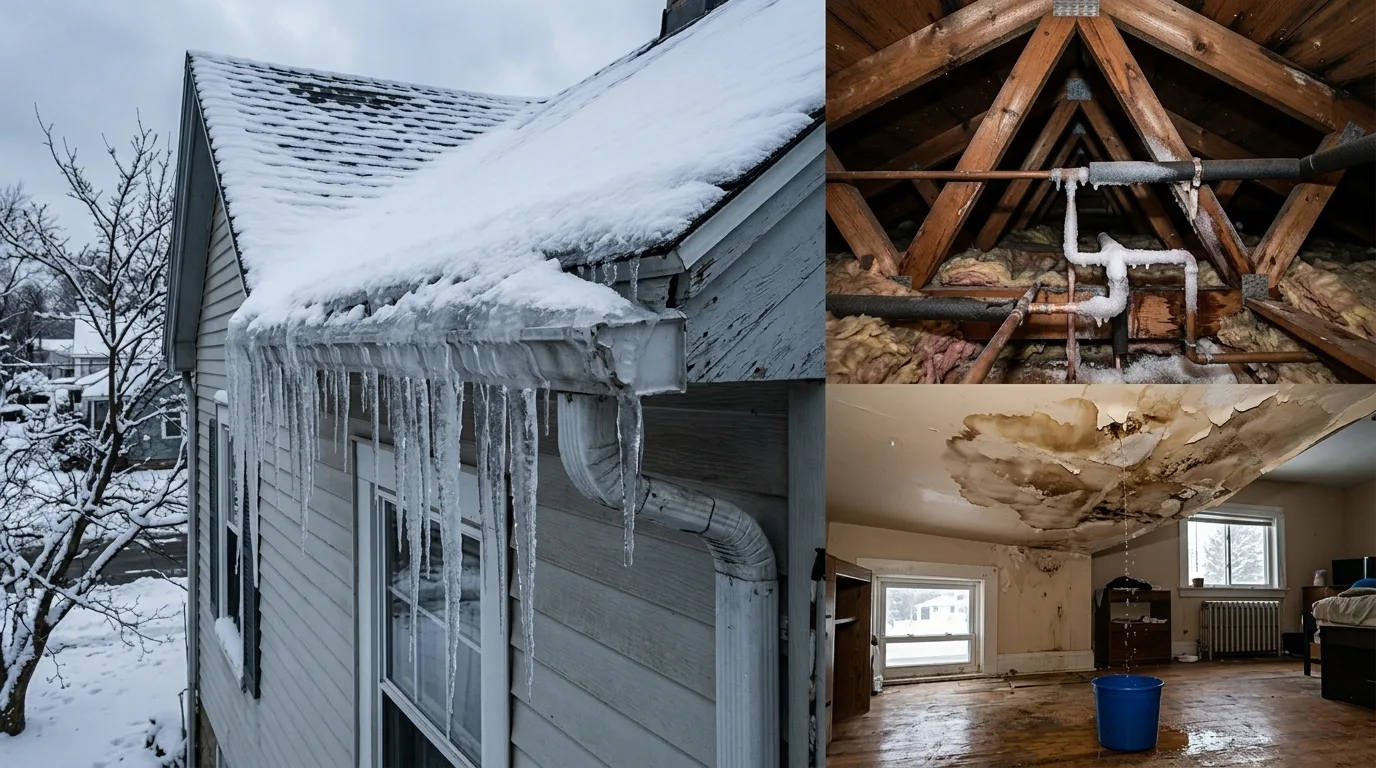
In February 2021, Winter Storm Uri caused more than $200 billion in infrastructure damage across Texas — and Cedar Park was among the hardest-hit communities in the Austin metro area. Homes throughout Williamson County experienced simultaneous pipe failures when temperatures that Texas infrastructure was never designed to handle arrived without warning. What made that event so damaging wasn’t just the cold — it was that most Cedar Park homes had supply pipes running in uninsulated exterior walls and unconditioned attic spaces that offered no freeze protection whatsoever.
In this post, we cover why Cedar Park’s infrastructure creates elevated burst pipe risk during winter freezes, how to prevent pipe failures, and the immediate steps to take when a pipe bursts in your home.
Burst Pipe Water Damage in Cedar Park?
24/7 emergency water removal and restoration — call (877) 698-1311 immediately.
Why Cedar Park Homes Are Vulnerable to Pipe Bursts
The pipe burst risk in Cedar Park during winter freeze events stems from a fundamental design gap: Texas construction standards were established for a climate that rarely experiences sustained temperatures below 20°F. Insulation codes that govern pipe protection in northern states simply don’t apply here, leaving Cedar Park homes with supply lines routed through exterior walls, crawl spaces, and unconditioned attic spaces that receive no freeze protection beyond the ambient home temperature.
When sustained hard freezes occur — temperatures at or below 20°F for multiple consecutive hours — water inside unprotected supply lines reaches the freezing point and expands. PVC and CPVC pipe, which is common in Cedar Park construction through the 2000s, has very little flexibility and cracks under this expansion pressure. Copper pipe can sometimes withstand the initial freeze but fails when the ice thaws and water returns to liquid form, sometimes hours later. This delayed failure is what creates the most damaging scenarios — homeowners turn off HVAC thinking the house is safe and then leave, returning hours later to find the pipe has let go.
Twin Creeks and older sections of Carriage Hills, where construction predates modern pipe routing standards, saw higher failure rates during Uri than newer Cedar Park developments — but no neighborhood is immune when temperatures reach the extremes of that event.
Types of Freeze-Related Pipe Failures
Supply line rupture: Water supply pipes (PVC, CPVC, copper, or PEX) freeze and crack, releasing water at supply line pressure — often hundreds of gallons per hour — when the ice thaws.
Connection failure: Pipe fittings and connections are the most vulnerable points — the transition between pipe materials or between pipe and fixture is where freeze stress concentrates.
Expansion tank failure: Water heater expansion tanks and pressure relief valves can freeze in unprotected utility rooms, causing failures that release stored hot water.
Outdoor hose bib rupture: Outdoor spigots that aren’t properly insulated or drained before a freeze event fail at the connection point where the pipe enters the exterior wall.
Practical Prevention Steps for Cedar Park Homeowners
- Insulate exposed pipes: foam pipe insulation on any supply line in an unheated space — attic, garage, exterior wall — costs under $50 and provides meaningful freeze protection during moderate freeze events
- Drip faucets during hard freezes: a slow drip at the farthest fixture from the water heater keeps water moving and reduces freeze pressure — particularly important during overnight temperature drops
- Know your water shutoff: every Cedar Park homeowner should know the location of the main water shutoff valve and verify it operates before freeze season arrives
- Disconnect garden hoses: water trapped in a connected hose can freeze backward into the hose bib and into the supply line — disconnect and store hoses before the first freeze
- Heat tape on vulnerable lines: electric heat tape on especially exposed lines (in attached garages, in attic runs) provides active freeze protection during sustained cold events
What Happens When a Pipe Bursts
The water damage from a burst supply line in Cedar Park can be extensive because supply lines operate at significant pressure — water flows continuously until the main shutoff is operated. Homeowners who discover a pipe failure hours after it began — or who were away from home — often find water damage throughout the home from ceiling to foundation.
Burst Pipe Water Damage? Call Cedar Park's Emergency Team
Immediate 24/7 extraction and water mitigation — (877) 698-1311.
Burst pipe water damage typically involves structural drying and water mitigation across multiple rooms, replacement of insulation and drywall that has been saturated, and mold remediation if the failure went undiscovered for more than 24 hours. The clay soil interaction is important here: when a pipe failure saturates the soil around a Cedar Park slab foundation, the expanding clay pushes additional moisture upward through the slab — extending the affected area beyond where the water flowed directly.
Most homeowner insurance policies cover sudden and accidental pipe burst damage, making this one of the more straightforward insurance restoration claims. However, insurers typically exclude damage from pipes that show evidence of prior damage or neglect — which is why documenting your pipe maintenance history matters.
Cost of Burst Pipe Water Damage Restoration
Burst pipe water damage restoration in Cedar Park averages $3,062–$6,101 for the full extraction, drying, and reconstruction sequence, depending on how long the pipe ran before shutoff and how many rooms were affected. Minor single-room events where the pipe was caught quickly can run $500–$1,500 for mitigation alone. Major multi-room failures from undetected overnight pipe bursts can reach $8,000–$15,000+ when drywall, insulation, and flooring replacement are combined with mold remediation for delayed-discovery events.
The timing of burst pipe events in Cedar Park — typically during overnight freeze periods when homeowners are asleep or the home is unoccupied — means many of the worst-case scenarios involve extended water run time before discovery. Setting up water sensors at water heater connections and under sinks is a low-cost investment that alerts homeowners immediately when water is present in unexpected locations.
Frequently Asked Questions
How do I know if a frozen pipe has burst in my Cedar Park home?
Turn on a faucet that is downstream of the suspected frozen pipe. If water pressure is absent or severely reduced, the pipe may be frozen. If you hear running water inside a wall or ceiling when no fixtures are operating, a pipe has likely burst. Check the water meter — if it is spinning with all fixtures off, water is flowing somewhere it shouldn’t be. If you find any of these signs, shut off the main water supply immediately and call for emergency water removal.
Does homeowners insurance cover burst pipe water damage in Cedar Park?
Most standard homeowner insurance policies cover sudden and accidental burst pipe water damage. The key terms are “sudden” and “accidental” — damage from a pipe that had visible prior deterioration or that resulted from a known maintenance issue may be contested by the insurer. Document the failure point carefully and have your restoration contractor photograph it before any pipe repair work begins. We coordinate with insurance adjusters as part of our restoration service and provide documentation that supports your claim.
How quickly does mold develop after burst pipe water damage in Cedar Park?
In Cedar Park’s climate, mold colonization from burst pipe water damage can begin within 24 hours — and during the warm months of spring through fall, sometimes faster. Winter freeze events are slightly lower risk for immediate mold growth because ambient temperatures are lower, but the warm-up that follows a freeze event can accelerate mold growth quickly. Professional extraction and structural drying within the first 6–12 hours after pipe failure is the most effective mold prevention measure.
Related:
- Cedar Park’s clay soil makes water damage worse
- Slab foundation water detection for Cedar Park homeowners
- Categories of water damage: what Cedar Park owners should know
Burst Pipe in Cedar Park? We Respond Within Hours
Cedar Park Water Damage Restoration — 24/7 emergency pipe burst response. Call (877) 698-1311.