5 Signs of Water Damage in Your Cedar Park TX Home
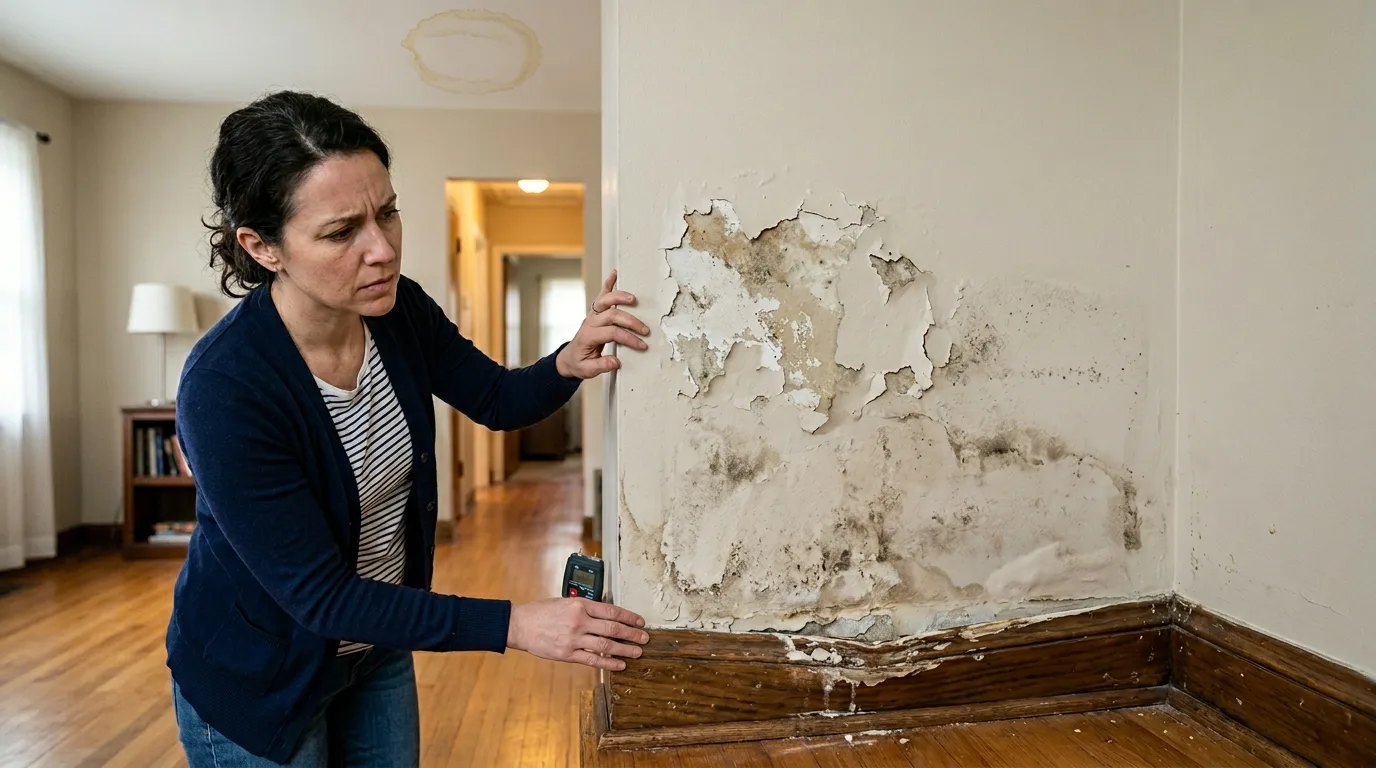
What if the water damage in your Cedar Park home has already started — and you don’t know it yet? In a city where Taylor Black Clay soil pushes moisture upward through slab foundations and Flash Flood Alley storms saturate the ground within minutes, water intrusion can be underway for days or weeks before it announces itself with a visible wet spot. Knowing the specific warning signs — particularly those associated with Cedar Park’s slab-on-grade construction and Central Texas climate — can help you catch water damage before it becomes a mold remediation project.
In this post, we cover the 5 signs of water damage that Cedar Park homeowners most commonly miss, what each signal means, and what to do when you see them.
Spot a Warning Sign in Your Cedar Park Home?
Free assessment with thermal imaging — we find what visual inspection misses. Call (877) 698-1311.
Why Water Damage Signs Are Harder to Spot in Cedar Park
Cedar Park’s slab construction creates a water damage detection challenge that doesn’t exist in crawl space markets. When water enters beneath the slab — from soil moisture migration during storm saturation events or from a supply line leak beneath the concrete — it has no visible path to the interior until it has accumulated enough to wick upward through the concrete itself. By the time a homeowner notices a damp spot on tile or a musty odor, the moisture source has typically been active long enough to begin mold colonization in the enclosed assembly space beneath their floors.
The city’s warm, humid spring climate compounds this. Homeowners in the Ranch at Brushy Creek or Carriage Hills neighborhoods who dismiss a faint musty smell as “spring humidity” are sometimes sitting on an active mold colony that has been growing beneath their flooring for weeks. The 5 warning signs below are the early indicators that professional assessment can confirm before a simple moisture event becomes a comprehensive restoration project.
The 5 Warning Signs
1. Musty odor that changes with weather or HVAC operation
A persistent musty or earthy smell is the most common first indicator of concealed water damage in Cedar Park homes. This smell is produced by microbial volatile organic compounds (MVOCs) — the metabolic byproducts of mold colonies growing in hidden locations. The smell that intensifies after rain events (as sub-slab moisture is pushed upward) or when the HVAC system starts (as spores from inside ductwork are distributed) is particularly characteristic of water damage that has progressed to mold growth.
If the musty smell is confined to one room or one corner of the house, the mold source is typically within a few feet of the strongest odor point. Sub-slab mold in Cedar Park’s slab-on-grade homes often produces localized odor that rises through flooring gaps rather than distributing evenly through the home.
2. Flooring changes — buckling, warping, or unexplained soft spots
Flooring changes in Cedar Park homes are a reliable water damage indicator because moisture affects all common floor materials visibly. Hardwood and laminate floors absorb moisture from below (sub-slab intrusion) and from above (storm water or appliance leaks), expanding across the grain and producing visible buckling or doming. Tile and grout joints that crack or pop loose — particularly in a localized pattern rather than uniformly — indicate differential slab movement from clay expansion or sub-slab moisture accumulation. Soft spots in vinyl flooring or subfloor that feel spongy underfoot indicate saturation of the underlayment material.
3. Staining on ceilings or walls — especially ring patterns
Water stains on ceilings or walls in Cedar Park homes are obvious when they’re fresh and dark. The stains that get missed are the old, dried rings — pale yellow or tan circular marks that blend into the ceiling color and are easy to rationalize as “old.” These rings indicate a water intrusion event that dried, leaving mineral deposits behind. The stain may be old, but the pathway that produced it is still open — and the next rain event or pipe leak will use it again.
Ring stain patterns — a darker outer ring with a lighter center — are characteristic of water that has dried repeatedly in the same location. Multiple concentric rings indicate repeated wetting and drying cycles from a persistent slow leak, often from a roof penetration, HVAC condensate line, or supply line slow drip.
Cedar Park Water Damage Signs? Get a Free Professional Assessment
Thermal imaging identifies hidden moisture in walls and sub-slab areas. Call (877) 698-1311.
4. Sudden increase in water bills or water meter movement
Cedar Park utility bills show water consumption by billing cycle. A sudden increase — without a corresponding increase in irrigation, pool filling, or household use — indicates water is flowing somewhere it shouldn’t be. A 20% or greater increase in water consumption without explanation is sufficient reason to run the meter test: read the meter, wait 30 minutes with all water off, re-read. Any movement confirms an active leak.
In Cedar Park’s slab-on-grade homes, pressurized supply line leaks beneath the slab are a common source of unexplained water bill increases. These leaks can run for weeks before producing visible surface moisture because the sub-slab soil absorbs the leaking water until it saturates fully and begins forcing moisture upward. The Twin Creeks neighborhood sees recurring slab leak events from aging supply line infrastructure that often begin this way.
5. Sticking or misaligned doors and windows
In Cedar Park, doors and windows that suddenly stick — particularly exterior doors or windows that previously operated smoothly — can indicate slab movement from clay expansion or differential settlement from sub-slab moisture. As the slab shifts, it moves wall framing with it, causing door frames to rack and gaps to open or close around window casings.
This sign is most meaningful when the sticking is new and localized — a single door that starts sticking after a wet season suggests localized slab movement at that wall, not the gradual whole-house settling that can also affect door operation. When sticking doors appear alongside musty odors or flooring changes, the combination strongly suggests active water damage affecting the foundation in that area.
Practical Next Steps After Spotting a Warning Sign
If you’ve identified one or more of these signs in your Cedar Park home, the most important next step is a professional assessment with thermal imaging and moisture meters — not a visual inspection alone. Many of the conditions described above are only verifiable with instruments that measure what the eye cannot see: moisture content inside walls, temperature differentials across the slab surface that indicate thermal anomalies from water, and sub-slab moisture levels beneath the flooring.
A professional assessment typically takes 1–2 hours for a standard Cedar Park home and provides a moisture map that confirms or rules out active water damage. When moisture is found, early-stage remediation is significantly less expensive than remediation after mold has fully colonized the affected areas.
Frequently Asked Questions
How much does a water damage assessment cost in Cedar Park?
A professional water damage assessment with thermal imaging in Cedar Park typically costs $150–$300 for a standard residential property, though many restoration companies — including Cedar Park Water Damage Restoration — provide free assessments as part of their service offering. If the assessment confirms water damage requiring remediation, the assessment cost is typically credited against the restoration project. Always confirm whether the assessment is free or paid before scheduling.
How quickly does water damage progress in Cedar Park homes?
Water damage in Cedar Park progresses faster than in cooler, drier climates because of the warm temperatures and ambient humidity. Active leaks saturate insulation and drywall within hours, and mold colonization begins within 24–48 hours in spring and summer conditions. Sub-slab moisture from storm events can support mold growth within 24 hours because the enclosed sub-slab space maintains elevated temperature and humidity regardless of surface conditions. This timeline argues for immediate assessment when any warning sign appears.
Can I wait to see if water damage resolves on its own in Cedar Park?
No — water damage in Cedar Park does not resolve on its own. Water wicks further into materials, not away from them, over time. Sub-slab moisture has no natural drainage path in a slab-on-grade home. Mold grows; it does not dry out and die. The only thing that “resolves” without intervention is the visible water — while the damage it caused continues to worsen beneath the surface.
Related:
- Water damage restoration Cedar Park: 2026 complete guide
- Mold remediation in Cedar Park and TDLR licensing
- Categories of water damage: what Cedar Park owners should know
Signs of Water Damage in Cedar Park? Call for a Free Assessment
Thermal imaging and moisture mapping — we find hidden water damage before it becomes mold. Call (877) 698-1311.